Definition
What is a private LLM?
A private LLM keeps your prompts, documents, and outputs inside your perimeter, and when you own it, it becomes a sovereign asset.
In short
A private LLM is a large language model deployed inside your own environment, on-premise, air-gapped, or in your private cloud tenant, so that prompts, documents, and outputs never leave your perimeter or reach a third party. When you also hold the weights and IP, a private LLM becomes a sovereign LLM.
Private deployment vs private ownership
"Private" can describe two different things. Private deployment means the model runs in an isolated environment you control, so data stays in. Private ownership means you also hold the weights and the IP.
The strongest position combines both: a model you own, deployed privately inside your perimeter. That is what Locai delivers, a sovereign private LLM rather than isolated access to someone else's model.
Why enterprises want a private LLM
- Data protection: Sensitive prompts and documents never leave your environment, reducing regulatory and contractual exposure.
- Domain expertise: A private LLM can be post-trained on your proprietary knowledge so it reasons in your organisation's language.
- Predictable economics: Running your own model replaces a per-token bill with a fixed-cost asset.
- Control: You decide when the model changes and how it behaves, no silent updates.
With Locai
What thislooks like with Locai.
Running AI locally means assembling hardware, a model and a serving stack that work together. Here is what it looks like when that arrives as one product.
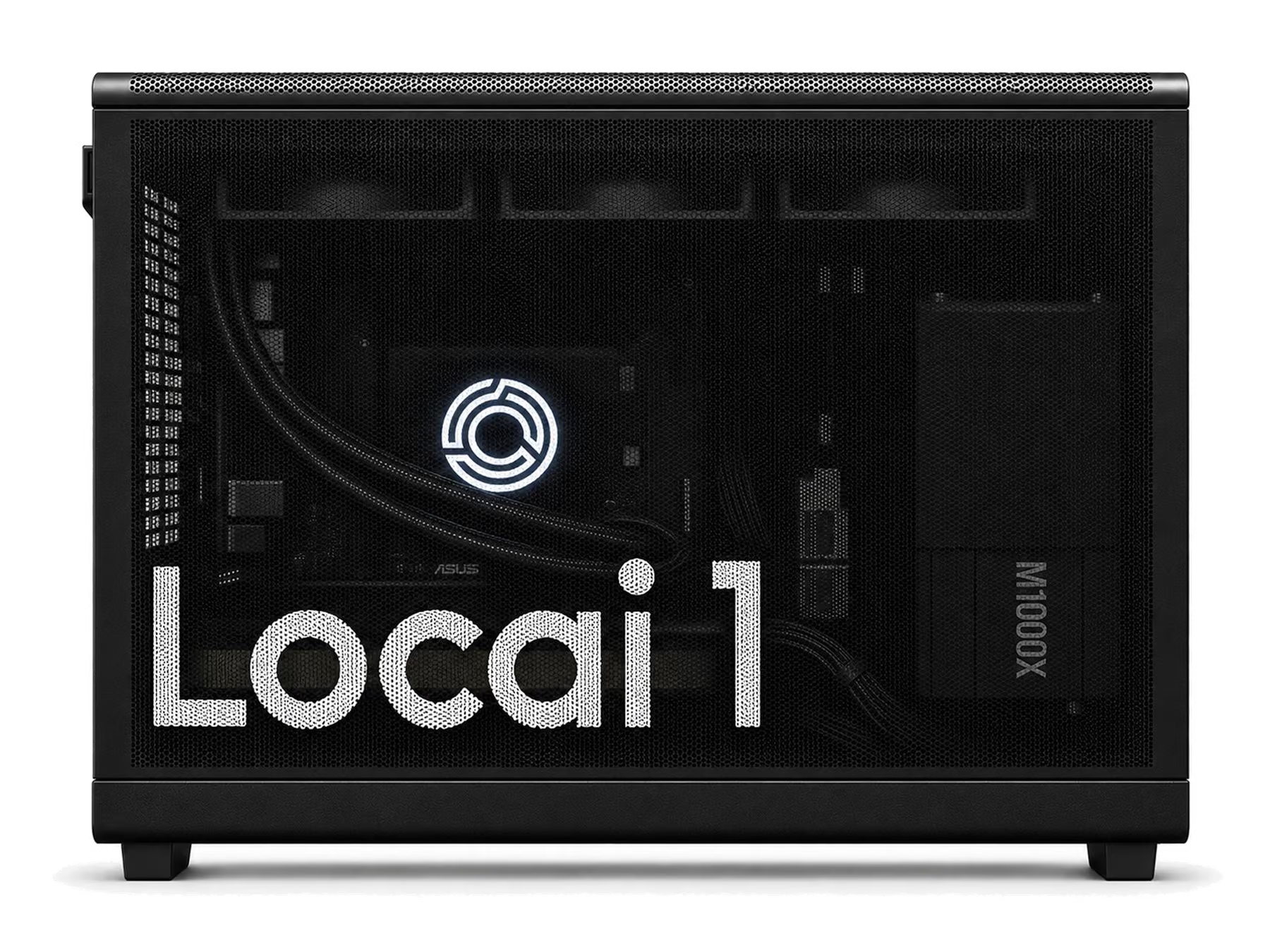
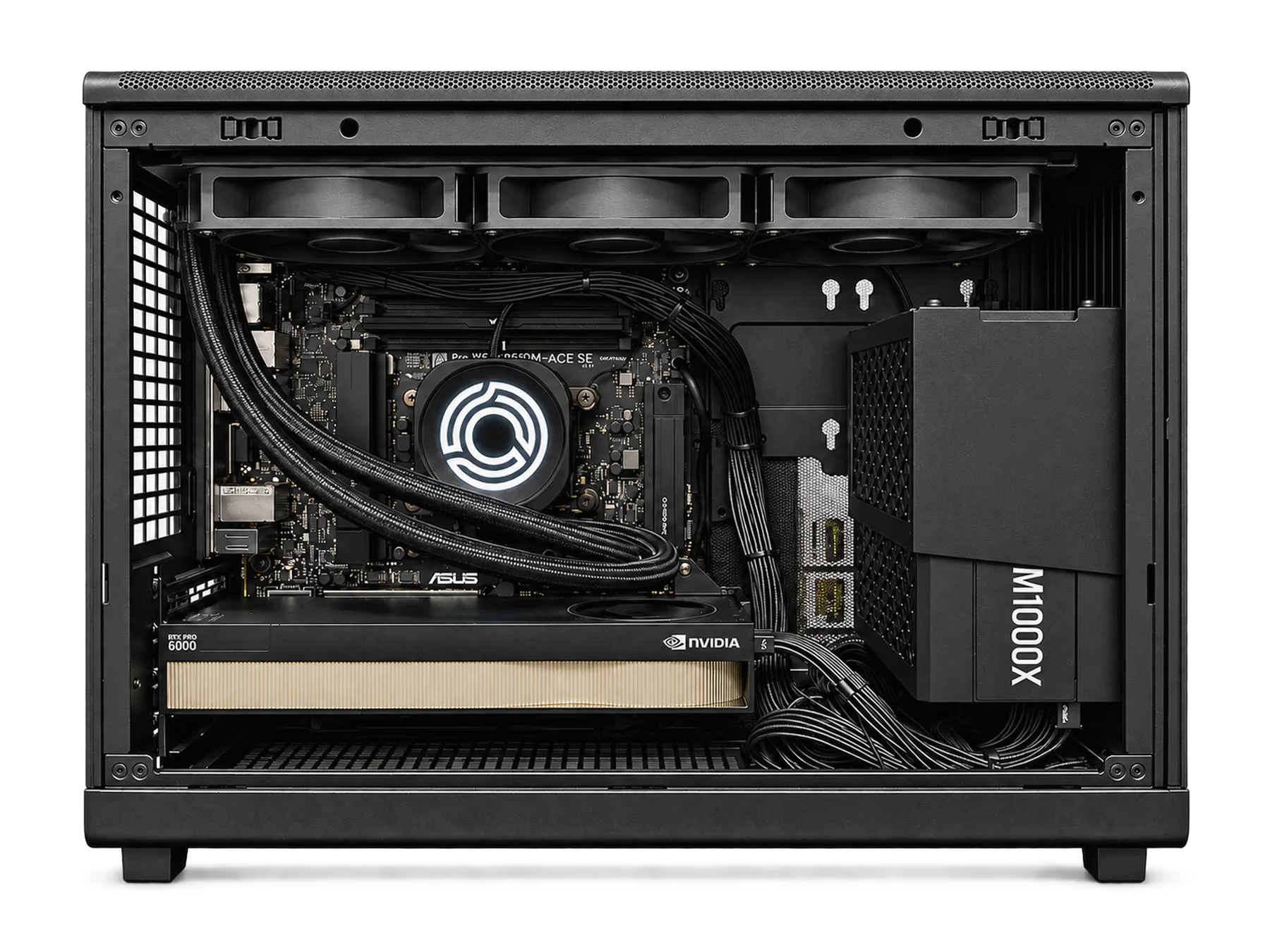
Locai Labs builds Locai 1, an on-prem AI appliance. It is one machine that arrives with everything already in it: the hardware, our open-weight Locai Juno models, and Locai OS, the operating system that serves the models and handles users, access and monitoring. You plug it into a mains socket and your network, and your team is working in about 15 minutes. No cloud account, no per-token bill, and nothing leaving the building.
The reason a data-centre-class model fits in an AI computer on your floor is SPACE, our compression algorithm. Instead of asking how much of a model can be cut while keeping it broadly similar, SPACE asks what the model needs to be good at, preserves the subnetworks behind those capabilities and strips back the rest. The result is a smaller specialist rather than a shrunken generalist, tuned to the exact hardware it ships on.
Locai 1 Nano starts at £9,910, Locai 1 at £24,999, and Locai 1 Pro at £54,950 with two GPUs, bought once and owned outright. Locai 1 Nano and Locai 1 run from a standard wall socket, and every configuration can run fully air-gapped. Any compatible open-weight model runs alongside Juno, and if you need a model trained on your own proprietary data we can post-train one and deploy it on the same machine.
From Locai Labs
Locai 1.Owned outright.
The AI computer for the whole team. Hardware, Locai OS, Juno models and the Locai Agent in one. From £9,910, owned outright, with no per-token bills.
FAQ
Questions,answered.
Is a private LLM the same as a self-hosted open-source model?
Self-hosting an open model is one way to get a private LLM, but on its own you get a generalist. Locai post-trains the model on your domain, so the private LLM is both yours and an expert in your field.
Does a private LLM mean lower quality?
No. Modern open base models post-trained on your data can match or exceed much larger general models on your specific tasks.
How is a private LLM deployed?
On-premise, air-gapped, in your private cloud tenant, or in a sovereign cloud, whatever meets your residency and security needs. Locai 1 packages this as a fixed-cost appliance.
Planning a deployment?Book a sovereign AI briefing.
A 30-minute session on owning your model: deployment options, the data path, and a clear cost range for your use case.